June 23, 2026 · 8 min read
Engobe vs Glaze: Differences, When to Apply, and Sgraffito
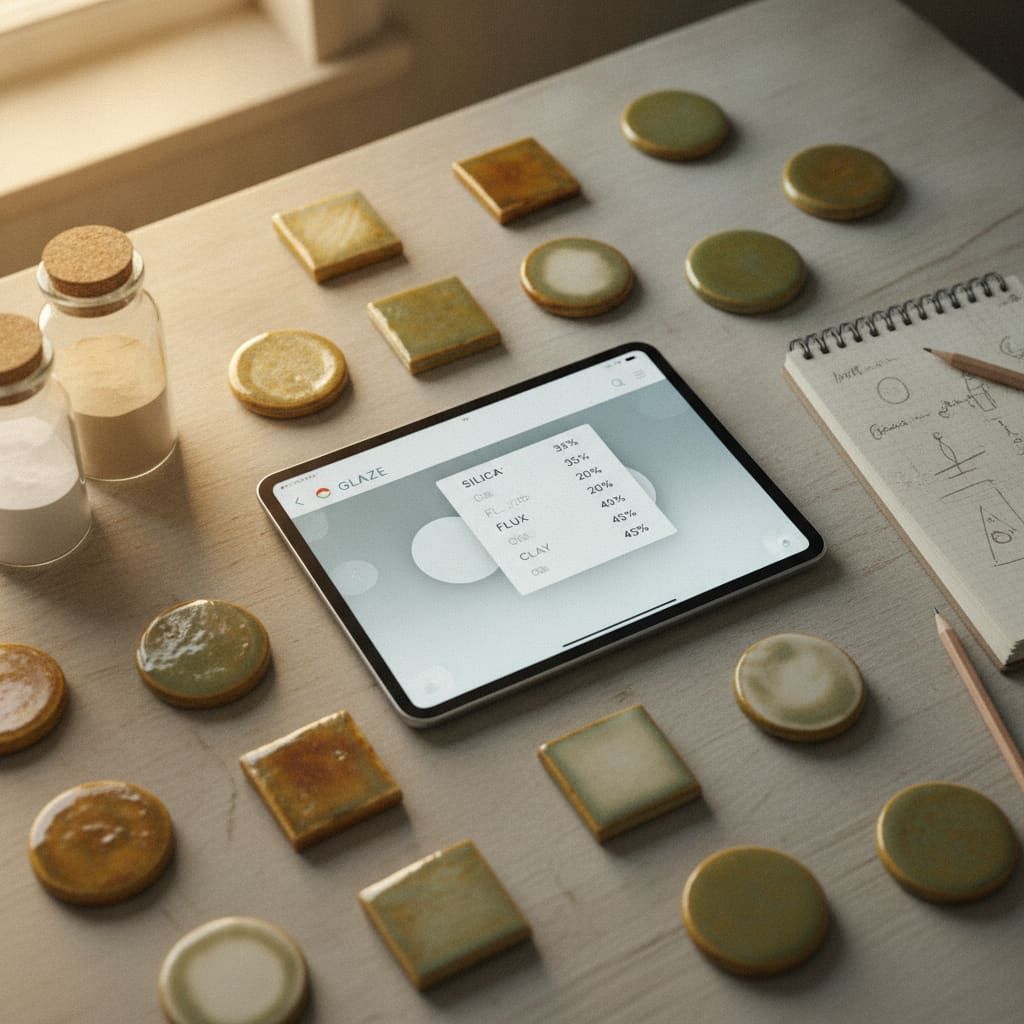
Engobe and glaze: understand the chemical differences, application stages, shrinkage matching, and when to use each in your ceramic practice.
Read article →
Ceramist's blog
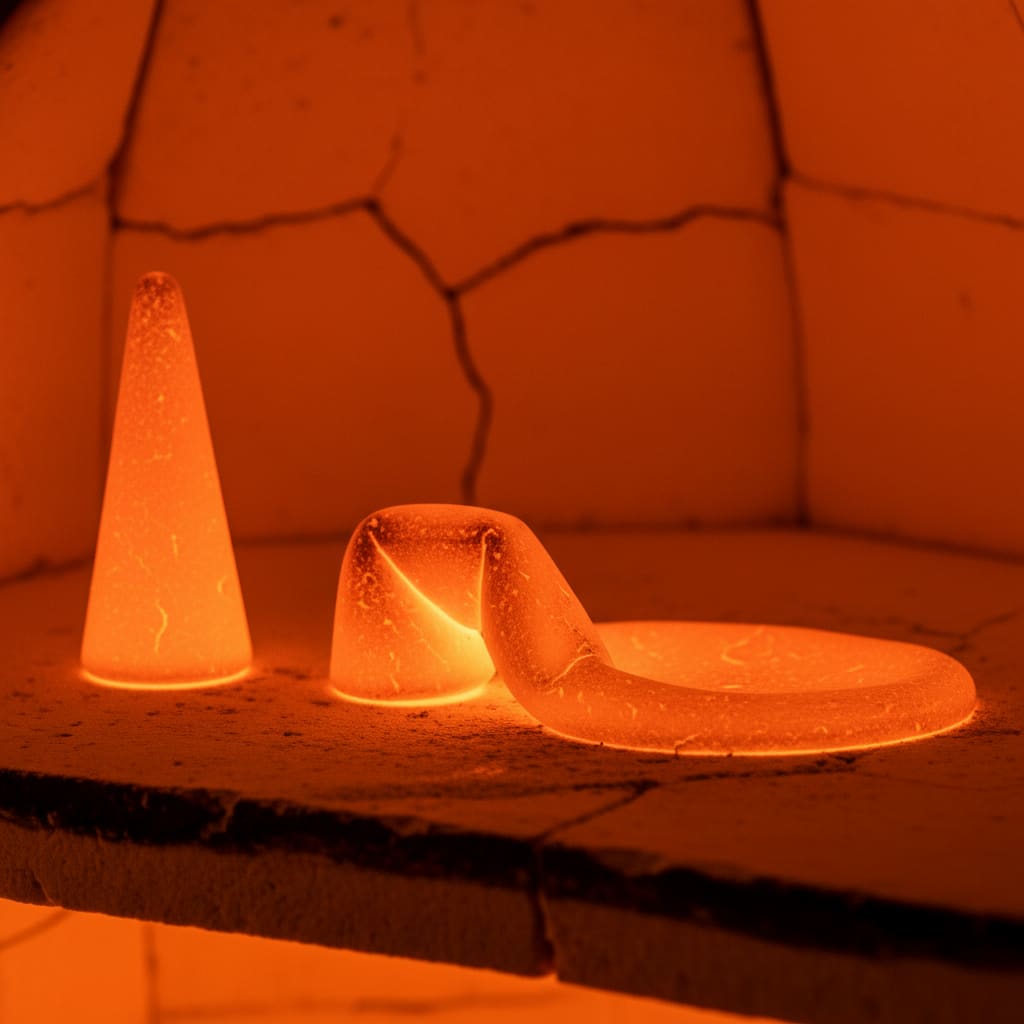
How to formulate a glaze, read a pyrometric cone, choose between oxidation and reduction, calculate Seger UMF. No mystification — dry, practical writing.
June 23, 2026 · 8 min read
Engobe and glaze: understand the chemical differences, application stages, shrinkage matching, and when to use each in your ceramic practice.
Read article →
June 23, 2026 · 9 min read
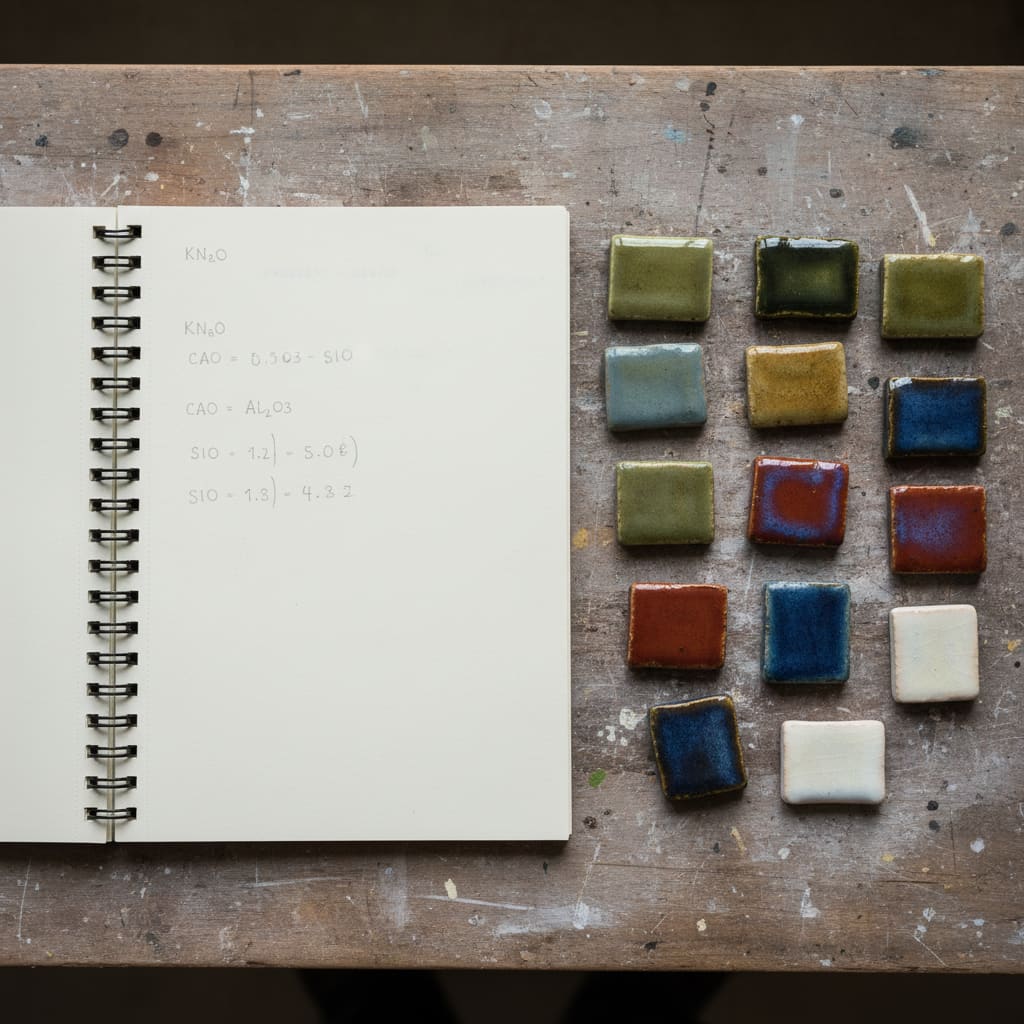
The molar unity formula (Seger UMF) explained without heavy math. Why it exists, how to read RO/R₂O₃/RO₂, and how to use it to diagnose glaze defects.
Read article →
June 23, 2026 · 8 min read
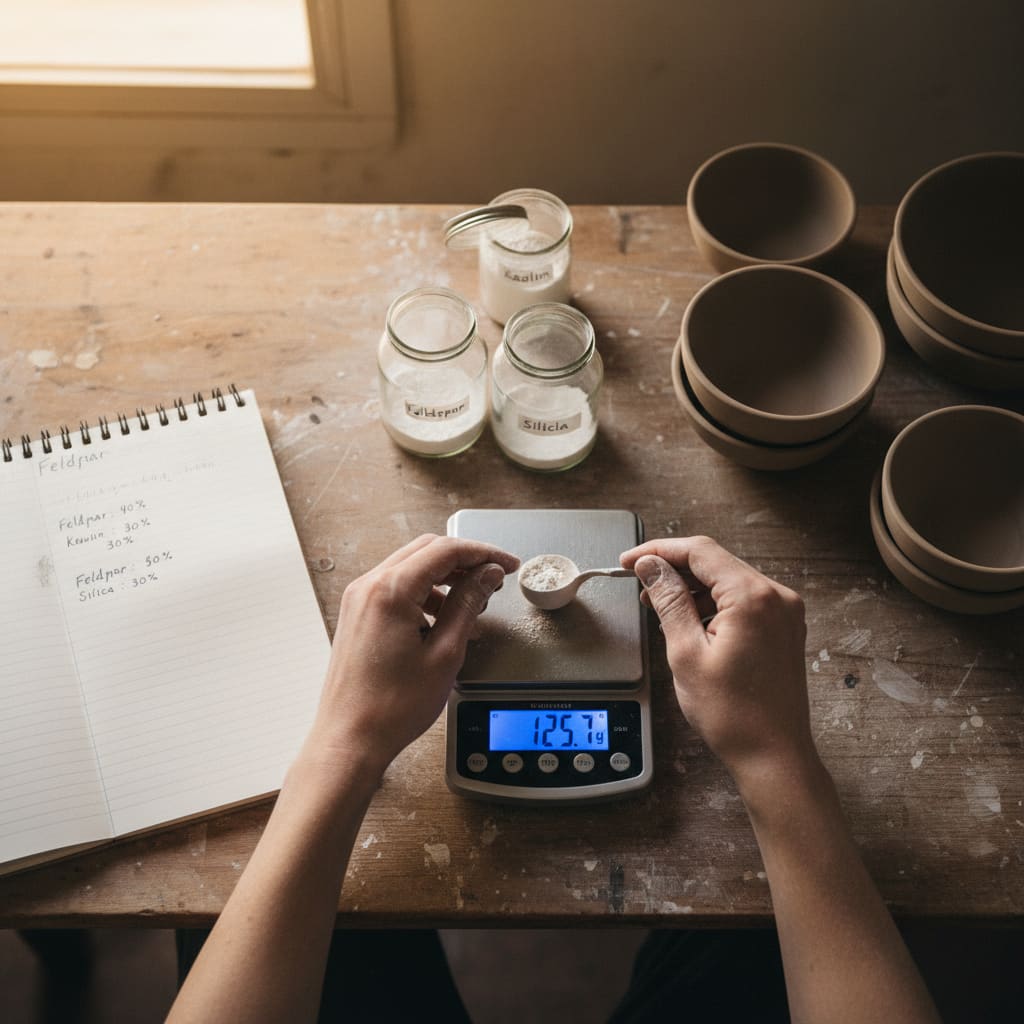
Practical step-by-step guide: raw materials, percentages, cone, atmosphere. Covers empirical method, Seger UMF validation, and using AI to speed up the process.
Read article →
June 23, 2026 · 6 min read
How to chat with an AI to swap raw materials, adjust percentages, and validate glaze chemistry in real time — no more Excel for cone, atmosphere, or SiO₂/Al₂O₃ ratio tweaks.
Read article →
June 23, 2026 · 7 min read
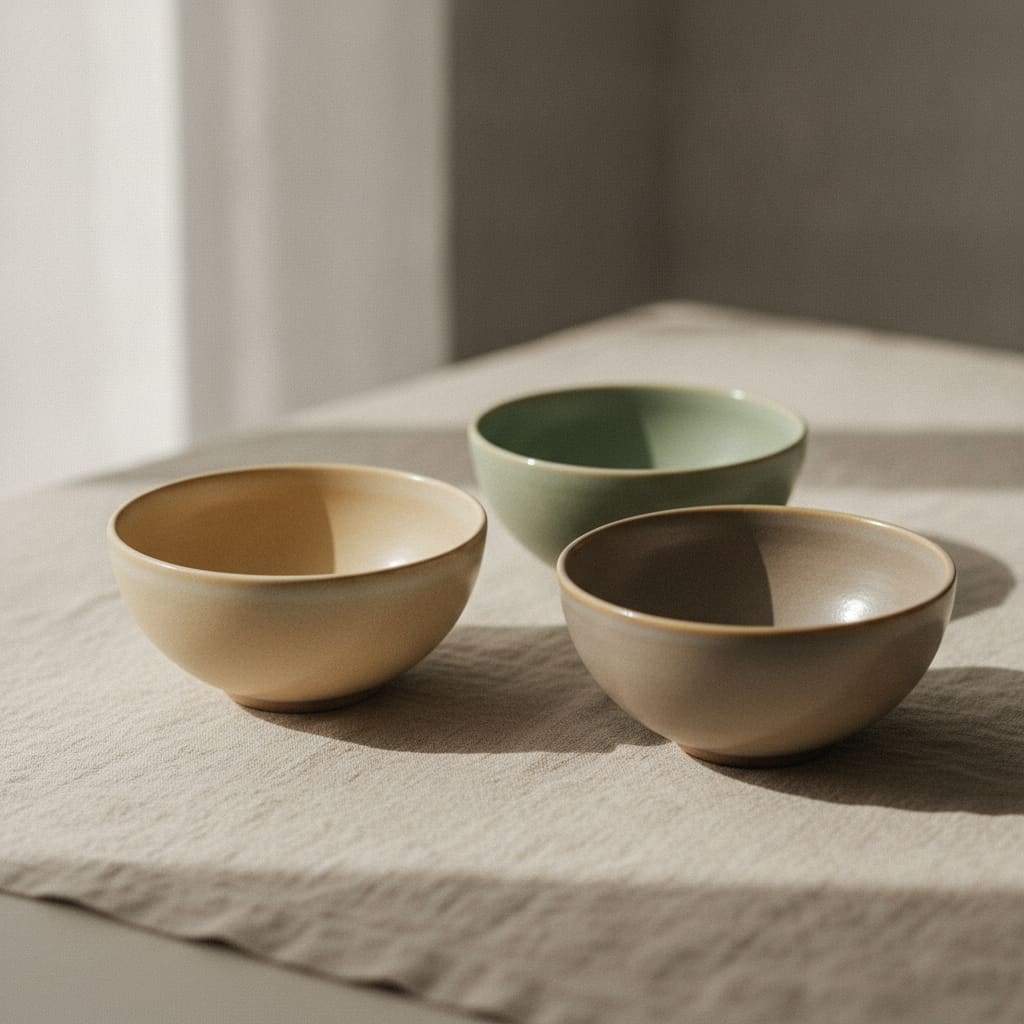
What makes a truly matte glaze — not just underfired. Two chemical routes to matte at cone 6, target UMF chemistry, a base recipe to test, and food-safety considerations.
Read article →June 23, 2026 · 8 min read
Tenmoku glaze cone 10: saturated-iron chemistry, kaki break at the rim, critical thickness, and cooling. Base recipe, UMF, and bench tests.
Read article →June 23, 2026 · 9 min read
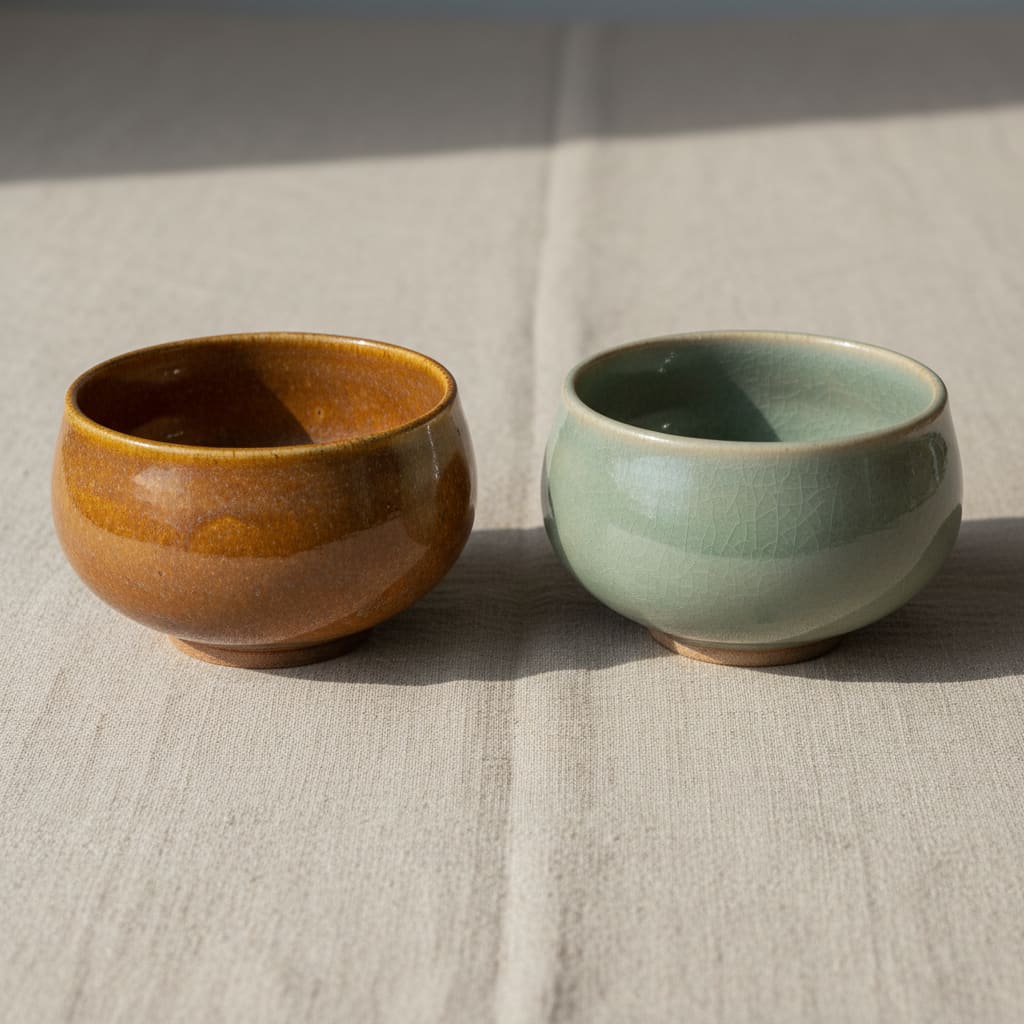
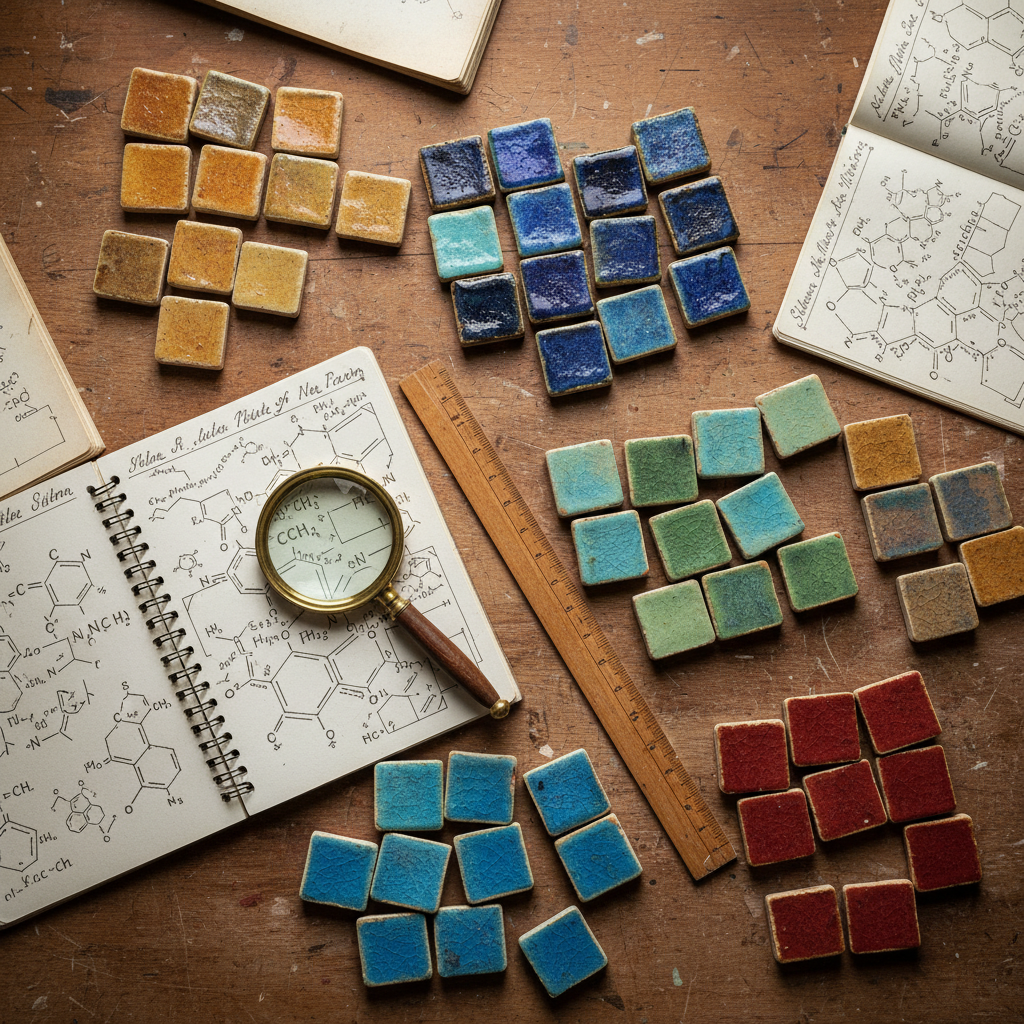
Understand the chemistry behind crackle glaze, how to adjust the crack network by modifying oxides and cooling rate, and the real food-safety warning.
Read article →
June 23, 2026 · 7 min read
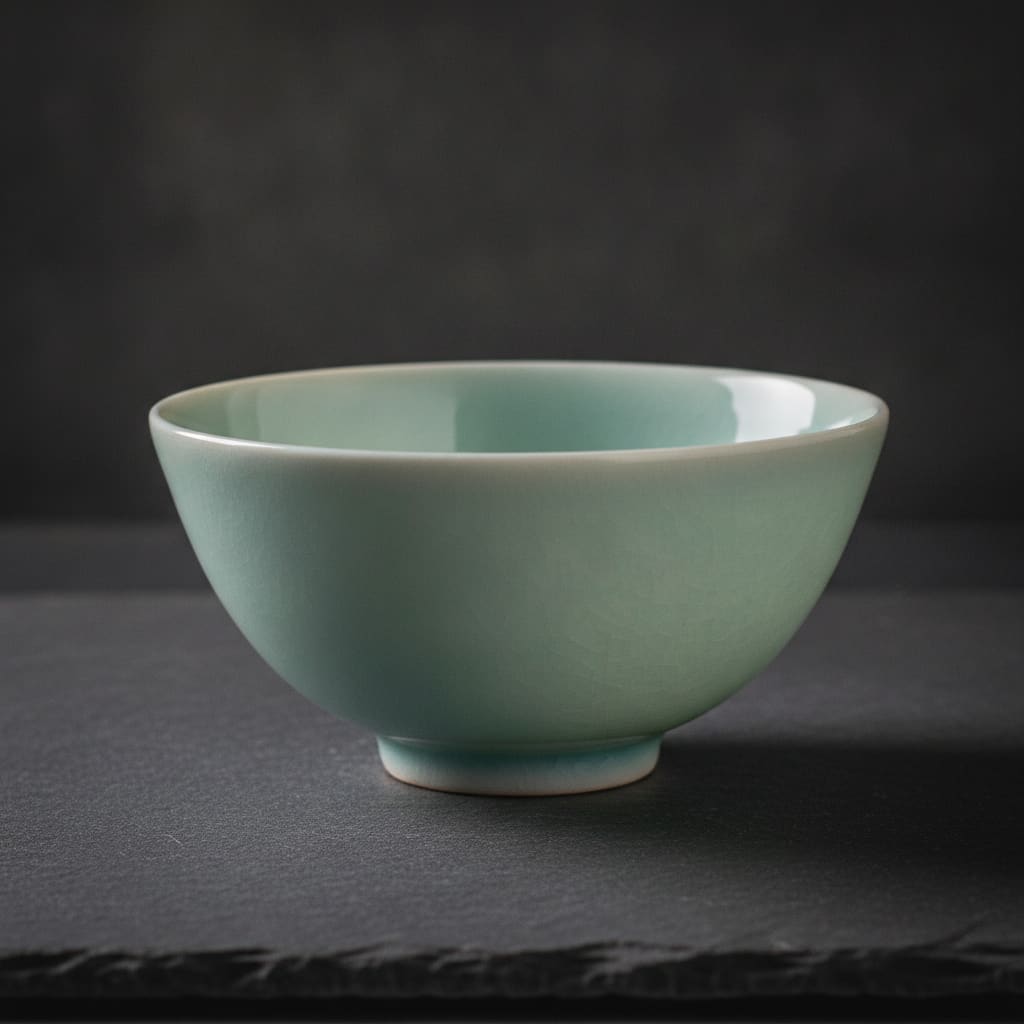
Why celadon needs reduction, how much iron to use, the 4-3-2-1 base recipe, the importance of thickness, and common mistakes that leave it yellow, washed-out, or muddy.
Read article →